Showing posts with label health. Show all posts

Wednesday, April 23, 2014

Earth Day is Every Day

 I didn't plan for Earth Day 2014 and my mammogram to go hand-in-hand. In fact, I didn't put the two events together until I was sitting in the "butterfly room" of the Breast Center, in Oakland, with all the other ladies who'd donned medical-center-issue white robes to wait our turns for our screenings. I appreciated how those who designed the breast health center had made efforts to make the whole visit as pleasant as possible: different rooms are marked with various flowers (I got a lotus), or butterflies, and the sound of bird song comes through the speakers as you wait for your named to be called. And I appreciated those who founded Earth Day to rally more folks around valuing the planet and the environment. But I'm too aware of the fact that butterflies are faced with their own climate-related problems and that mammograms may or may not be that helpful in preventing breast-cancer related deaths. So the transformative symbolism of beautiful creatures used as decor perhaps didn't have the desired effect on me. But the whole experience did jar me into thinking of my friend Samantha, who passed away 6 years ago, at 41 years of age, due to breast cancer.  
Sam and I met as idealistic undergrads at UCSC, majoring in Environmental Studies and adjusting to semi-adult life on and off-campus. While I'd grown up surrounded by nature, Sam was from LA and knew city sidewalks and paved highways better than the dirt trails and redwoods that were my familiar. Slightly jaded about the social scene, Sam was nonetheless completely floored by the natural world she discovered in Santa Cruz, and was wide-eyed and wondrous every time she spotted something new through her binocs. Wildness, the out-of-doors, birds and snakes and butterflies where new to her as a young adult, and her curiosity helped me realize how fortunate I'd been to be raised around trees and wildlife. Likewise, while I helped her identify birds, she showed me how to be comfortable at a party. She was fearless around loved ones and strangers alike. She'd tell you if she thought your boyfriend was no-good, loved elephant seals and Star Wars, Count Basie and the Steaming Hunks of Hot Love Chuncks college band, in equal measure. She ate with gusto, cooked nonchalantly, and would share her lunch anytime I stopped by her apartment on my bike ride up to campus.  On Earth Day circa 1990, you'd likely find her sitting in the great meadow, a butterfly painted on her cheek, watching the crowd, laughing and generally taking it all in. 
Sam knew how to live, and her natural openness toward people and nature went unabated after college... so it was especially cruel when she was diagnosed with breast cancer when at age 39, and crueler still that after a brief period of remission, the disease would come back swiftly and decisively two years after her initial diagnosis. I was grateful I got to say goodbye to her and acknowledge all she meant to me before she died, but like all deaths of loved ones, processing what meaning is to be found is ongoing and episodic.
The fact that she died so young almost hits me harder now, when I realize that she, too, went in for mammograms, on schedule, that all failed to detect what would kill her even as she reported other symptoms to her doctors. My sadness is only amplified by the fact that Earth Day 2014 finds us in a world where the disconnect between cause and affect seems at as great a distance as it was 25 years ago. Yesterday, a woman wished me a 'Happy Earth Day' while holding a styrofoam cup. I was too stunned to say anything. Just like I didn't question my technician as she set me up for my mammogram, at once skeptical and grateful I had insurance to cover the prescribed test.
In reality, taking care of one's health, and focusing on the well-being of the environment is every day.  Life goes on, with or without us, so how to appreciate the moment, this earth, this body, right now?
Tickets can be purchased from the Albany Twin Theater box office (and online) for $10 ($8 for seniors and students) after April 15th.
There will be a screening in Albany next week: Transition Albany & Transition BerkeleyTuesday April 29, 7 pm ARISE Albany Twin Theater, 1115 Solano Avenue, Albanyhttp://arisethemovie.org. Tickets can be purchased from the Albany Twin Theater box office (and online) for $10 ($8 for seniors and students) after April 15th.Check out the trailer here:

Wednesday, March 19, 2014

Read.Eat.Listen: Orderliness

There's nothing exactly sexy about doing ones taxes, but once I got over the 'ughs' of it all, I got really into doing them this week. In any event, getting all my accounting up to date spawned a rash of (relative) orderliness. The words and music filtering into the reclaimed structure:

Read: Between the Malaysian flight disappearance acting as my whodunit mystery and Russia's political/war drama, I admit I've been a newshound. But as I'm about to do a writing workshop with the fantabulous Santa Cruz-based Ellen Bass, some poetry has crept in to save me. "Like a Beggar" is her latest.

excerpt of "Waiting for Rain" from Like a Beggar:
"Maybe it's wrong/to think of better and worse./There's no one who can carry my fear/for a child who walks out the door/not knowing what will stop her breathe./The rain they say is coming/sails now over the Pacific in purplish nimbus clouds./But it isn't enough. Last year I watched/elephants encircle their young, shuffling/their massive legs without hurry, flaring/their great dusty ears. Once they drank from the snowmelt of Kilimanjaro. ..." — Ellen Bass

Eat: Though I grew up near fields full of them, I was first turned onto Brussels Sprouts as something I'd want to eat in a French train station during a cold winter trip abroad. Served as a side to something I can't remember, and helped along by a generous amount of butter, I came awake to their flavors. The cruciferous vegetable has since morphed into one of my favorite things to eat, and has nearly surpassed brocoli  as the in-house go-to vegetable. Check out this simple Kale and Brussels Sprout Salad from Epicurious. 
Listen: Eliza Gilkyson is a more-than-fine songstress out of Texas whose steadily amassed a stellar body of work. She released a new album this week, her 20th or so (!), "Nocturne Sessions." Here's a tune from the CD :

Monday, January 6, 2014

Read.Eat.Listen: Pick Me Up

You know the holidays are over when the cat pulls down the Christmas lights and the (living, Norfolk Pine) tree and the house has succumbed to the winter bug of the season. Well then!
Read:  Poetry Foundation. A campaign to 'flood Facebook with poetry' circluating this weekend just as I was being laid low pulled me out of a big wallow. I spent a few happy hours revisiting poets and discovering some new ones.  Here's one from a new-to-me poet Heather Christle.

Pursuits

It is not that you want
to be the one to make prints
in the untrampled snow
It is that you want
to be in the snow
without having touched it
to be of  the snow
not beginning
Everywhere commerce
dictates the shapes
that move you along
that seat you at the table
far from the snow
far from the act
of not touching
It only gets worse
A girl’s gotta eat
And your hunger’s
not even your own
          —By Heather Christle 

Eat: (Drink). Wellness Shots via Tashenna Lawson MindbodyGreen. Simple, strong and bracing.
Here’s how to make a basic wellness shot:
  • Juice ½-1 whole lemon
  • Juice 1-inch piece of ginger
  • Add a dash or two of cayenne pepper
Knock it back at the onset of a cold, or just when you feel like a little pick-me-up is in order. You’ll feel the effects fairly quickly. "

Listen: The always excellent Rosanne Cash's new CD "The River & The Thread" is scheduled for release January 14, 2014. Impeccable and literate, she never fails to inspire. NPR is previewing the CD on First Listen for the next few days and you can hear full tracks via SoundCloud and other sites. She'll be touring extensively, including a 4-day residency at SFJazz in April! Here's 'A Feather's Not a Bird'

Wednesday, October 2, 2013

The Dokotoro Project: Volunteer-led Effort to Translate "Where There is No Doctor" into Bambara


While getting health care coverage in the Unites States is one thing, finding a doctor usually isn't an issue. So unless you've traveled to less-resourced countries, it's hard to imagine that in many parts of the world, there simply isn't a doctor, and health care is, in some senses, DIY. 
Where There Is No Doctor  600-page, easy-to-read primary health care manual written by David Werner (co-founder and director of HealthWrights, and a visiting professor at Boston University International School of Public Health), has long been the go-to for Peace Corp volunteers and other community health care workers and educators in developing countries. However this widely used tome to village health care isn't available elsewhere. While Where There Is No Doctor has been translated into 80 languages, a group of Peace Corps volunteers working in Mali realized Where There is No Doctor isn't available in Bambara, a language spoken by over 10 million people in Mali and other West African countries.
Enter The Dokotoro Project — Dokotoro means 'doctor' in Bambara— a volunteer-led effort to translate Where There is No Doctor  into Bambara. The Dokotoro Project, a volunteer-led and donor-driven effort is using the French West Africa edition (published by Senegal-based ENDA) as the basis of the Bambara version, and supplementing it with updated medical information from Hesperian’s latest (2013) edition. They've completed much of the work, however, roughly half of the chapters remain to be completed before the Mali edition of Where There Is No Doctor is ready to publish. To finish the work, Dokotoro is seeking more volunteers and funds to help pay their team of translators in Bamako. In the meantime, Dokotoro Project's fiscal sponsor, African Sky, will be taking the translated chapters to Mali for field-testing this fall.  
The Dokotoro Project is hosting a fundraiser in San Francisco to help fund the completion of the Bambara version of Where There Is No Doctor: 

Saturday, November 9, 2013
3 – 6 pm
At a private home near Buena Vista Park, San Francisco
RSVP to jenna@dokotoro.org for location details. Space is limited. Please RSVP by October 31.
A request for donations will be made. If you cannot attend but would like to support the Dakotoro Project, please consider making an online donation or explore the website to learn about volunteer opportunities.
For more information, please visit: http://dokotoro.org.

Tuesday, April 23, 2013

Read.Eat.Listen: Relax

Like much of the world, I found myself troubled/fascinated/horrified by the events in Boston last week and read/listened to a little too much of the news. The antidote? Some grateful appreciation for my life and where I live, a timely set of exercises and some great tunes.
Read: This isn't a book-book, but a workbook/brochure, I found through bodyworker/teacher/writer Nikki Jordan. Having a long-standing interest in somatic practices, I was intrigued when she mentioned a TRE-Psoas "Tension and Trauma Releasing Exercises" by David Berceli, Ph.D and signed up for a workshop. I found the short series of simple exercises very  effective at meeting its claim 'to release deep chronic tension.' Good stuff, especially in times like these.
Eat: Soba noodles. Gluten-free, tasty and exceedingly quick and simple to make, soba noodles are another item getting regular play in these parts. Here's a slew of cold-weather soba based recipes and a hot-weather variation from The Kitchn blog to encourage your soba creativity.
Listen: Well, I know I mentioned them in a fairly recent Read.Eat.Listen, but after seeing Kelly Willis & Bruce Robison play a great show at Freight and Salvage this weekend, this household can't seem to get enough of their songs. Here's another bit of inspired songwriting from their Cheater's Game Cd.

Wednesday, April 17, 2013

Artist Interview: Sarah Fisher's Sacred Video Network

I first met Sarah Fisher when I was looking for a local director and filmmaker for a  music video for "Let's Move". Sarah has a clear aesthetic and an appreciation for both independent artists and Eastern Wisdom traditions — we had fun working with her to boot! I recently caught up with Sarah about her latest project, The Sacred Video Network, a project dear to her heart.

Q How did you first get into film making? Who or what inspired and inspires you?
SF: I've been making films since I was 12. I have loved creating visual stories since I was a kid. I studied Mass Communications/Broadcast Journalism as an undergrad because I wanted to be an international television reporter. While I never ended up pursuing the TV reporter path, I did develop a strong interest in producing/directing documentary films. Documentaries are such an important visual medium. I love that you can be both creative and educational — that you can really move people by crafting a story in a way that a broadcast entity most likely wouldn't do on their own

Q Whose work you look to as a standard? Do you have any mentors?
SF: I have a lot of mentors! I try to surround myself with people who are talented in all areas of film. I admire filmmakers like David Lynch, Walter Salles, the Maysles brothers, and Darren Aronofsky. Specifically, right now I am focused on entrepreneurship. So, I spend more time studying business-related topics than film making techniques. You'd be more likely to find me at a Meetup group, intensive start up business conference, or marketing seminar than any film networking group.

Q Tell us about the Sacred Video Network? 
SF: The Sacred Video Network is a start up website that will greatly raise the visibility and help forward-thinking holistic businesses reach their target customers. The Sacred Video Network (SVN) will widely promote our clients businesses across the web through unique distribution methods. These are some of the video products we produce to help your business gain exposure: testimonial videos, promotional videos, mini-documentaries, instructional videos. The mission of the SVN is to really connect holisitic businesses with their nice audience in a powerful, engaging way as well as help educate consumers who want to learn more about ANY type of holistic practice. We'll be launching our website in a few months. To learn more, visit http://www.sacredvideonetwork.com/ 
Q: Describe your dream project?
SF: I have so many dream projects! I've really been trying to reign in my focus lately and not take on too many big projects at once. The Sacred Video Network is my passion project right now and I'm determined to make it a sustainable business. I believe in the mission strongly because it can help so many people around the world improve their lives. After a few years of going strong with the SVN, I hope to build a music video network for independent musicians. Doing work in one medium for a very long time seems rather boring. Variety is the spice of life! I want to use the powerful medium of film/video to create a lasting impact of the lives of many people with lots of creativity.
Contribute to Sacred Video Network:

Monday, January 7, 2013

Three Ps (& a D) in Portland

I'm not here for work or to play, rather I'm in Portland on a bit of a lark while my S.O. works. A wintry, rainy Northwestern city might not be the first choice to visit if you're feeling under the weather, but Portland is hardly a place with which to find fault. Portland really is cool, figuratively as well as literally. As we're staying downtown, I spent my first day in the area and The Pearl District, enjoying some R&R and literary inspiration.
Yoga Pearl: Located, fittingly, in Portland's Pearl District, Early morning Mysore Style Ashtanga class is followed in quick succession by led Hatha and Vinyasa classes with some Yin Yoga and Restorative classes for good measure. The serene studio also boasts a Wellness Center and one of the best smoothie & juice bars in town...
Prasad: I'll go to Pearl for Prasad alone. Veggie bowls, healing elixrs, an extensive juice and smoothie menu. If the Wellness Shot (ginger juice, lemon, cayenne & echinacia straight up) I took doesn't cure me, I don't know what will. Especially since I chased it with Blackberry Kiss smoothie made with Oregon's own Marionberries. Yum and OK, now, I could look at books.
Powell's City of Books: Lest anyone think that no one reads actual books anymore, Powell's City of Books spans a city block and  keeps its shelves stacked high with seemingly every tome known to humankind. The largest independent new and used bookstore in the world has color-coded rooms that help you locate your area of interest. There's also a downloadable app that guides you turn by turn through the stacks if you don't want to ask one of the stores friendly book loving staff. It's hardly my first visit, but...wow, I'll say again. I whiled away a couple of hours here, decided on my purchases while reading them over coffee — they let you bring up to 5 books to browse into the cafe — bought the latest Alice Munro collection and re-remembered about 10 titles I want to/need to read.


Ok, about that D. That would be for Ducks. As in Portland Ducks, who I have to say I haven't been following. Nonetheless, I met self-proclaimed 'the biggest Duck fan' on the planet, a gentleman who was flying back to PDX via AZ where the Portland Ducks took the Fiesta Bowl. The birder in me eclipsed the football 'fan' and had to ask what kind of duck is a Portland Duck? Not a wood or a mallard or a whistling duck but a 'Donald-type Duck' I was told. A Disney Duck, was the general conclusion. In any case, congrats to the Ducks!

Saturday, January 5, 2013

Cold day questions

Some Questions on my mind today:
  1. Why is it you often feel really GREAT just before you get sick?
  2. How does anyone manage to get everything precious and wonderful out of the Vitamix after mixing something up?
  3. What's with LinkedIn's new(ish) hyper-endorsement tool?
I know. Not so terribly deep, but I woke up with a sore throat and an urge to stay in bed all day after a kick-ass day of energy. I eat healthy, I stand on my head almost every day, what gives? Oh well. We're going to Portland tomorrow and being sick in a hotel for three days was and is not part of my plan. So my focus has narrowed considerably.  Tea. Water. Wellness formula. Juice. Blankets. Internet.  A super food  smoothie that's o-so-yummy (this one featured dates & almonds) though some of its precious drops remain in the bottom of the darn mixer. I'm keenly aware that I'm grateful to have this very minor conundrum.
In the meantime, a bit of sleuthing while I convalesce didn't turn up complete answers to my questions but did provide some interesting Answer-like fodder:
  1. Really? Your Body Clock Can Determine When You Get Sick 
  2. It's all about the spatula 
  3. Said to make it easier to endorse folks with one click, I seem to be getting endorsed for some things I don't really do. Go figure.
And, speaking of Portland. As I was searching out things to do and shows to see while I'm there, I grew enamored with the Portland Cello Project, who alas, won't be in town when I am, but have made a wonderful record of Beck's 'Song Reader,' (which I'm now blasting).

Thursday, November 29, 2012

Read.Eat.Listen: Dream baby

Read: Provided I have the right sleep conditions, I'm one of those folks who likes to dissect my dreams for meaning. I don't know if it's the change in seasons or my recent move, but conditions for dreaming have been optimal. My friend Liz turned me onto this Signs & Symbols book many years ago, I found the tome amid the recent packing and unpacking and have been having fun interpreting things anew.
Eat: It's raining, it's [not quite] pouring. Soup is on. Behold the Adzuki Bean. I like it stewed up with wakame. So does The Whole Life Nutrition Kitchen (whose much better at listing ingredients in proper recipe format--I tend to eyeball everything that goes into the pot).
Listen: Trixie Whitley, daughter of the ultra amazing guitarist, Chris Whitley, has cool and talent in spades. Did you hear the project she did with Daniel Lanois, Black Dub? Check it out. In any case, Trixie does a lot of other projects, solo and otherwise, as well. In anticipation of catching her performance in SF next week, I'm enjoying some of her online media:

Friday, December 30, 2011

New Year's Panchakarma

Ghee, aka clarified butter, elixir of the gods
According to to Patanjali (whose yoga sutras are key tenets of the practice), Sharath noted, there are two different kinds of diseases, those that can be cured by Yoga and those diseases that can be cured by Ayurveda. Ayurveda, the traditional medicine native to India, has preventative as well as curative value. It's also hard to ignore while visiting the subcontinent.
Several friends gave glowing reviews about their experiences doing Panchakarma at Dixit Clinic here in Mysore. Curious, I signed on for the 7-day cleansing treatment based on Ayurveda to ring out 2011 and in 2012. 
Panchakarma (Sanskrit for '5 actions') is basically a de-tox program, Indian style, relying on several Ayurvedic therapies, including oleation, massage, steaming and purging (there's more invasive treatment available pending your condition. I asked the doctor to kindly not make me throw up and was grateful that wouldn't be needed). But this has meant no caffeine and a lot of medicated ghee (clarified butter).
For nearly every day of this last week of the year, I've been taken a rickshaw post-yoga practice to the clinic for ghee drinking, lunch and treatments (my regime augmented by some special treatments for my knees).
Fun, eh?
Despite having to down an intimidatingly large dose of ghee yesterday and the prospect of staying quiet on New Year's Eve, I've enjoyed the experience thus far.
Lord Dhanvantari, the physician of the gods
 In addition to the the health benefits, it's provided a mini-retreat to rest, review and look ahead to the new year. Here's to clarity in 2012, in butter and otherwise!   

Tuesday, December 13, 2011

Mysore: Pesticide watch

One of the charms of temporary Indian living is the vendors who stroll through neighborhood streets selling fruit, vegetables, housewares, you name it. Their presence is preceded by a vocal call of what they're selling, mostly indecipherable to my ear. But it's fun (and to me, novel) to walk out my door to see what's on sale. And often it's a bunch of vegetables whose names I've yet to learn. But yesterday, I rounded the corner for home and a man held out a handful of red grapes in one hand a plastic box of ...strawberries in the other. I blinked. Was I back at home in California? (CA grows 90% of strawberries grown in the US and I was born in Watsonville where a huge percentage of that 90% is grown).
"Where are they grown?" I asked the vendor, surprised.
"Bangalore," he said.
Evidently, strawberries can be grown nearly anywhere in the world.
But where they organic? He shrugged.
I didn't buy any strawberries in India, and I likely won't.  There are two things I avoid as much as I consciously can in the US that I can't get away from here: plastic and pesticides. There's no shortage of produce being sold in Mysore, recognizable to my eye (cauliflower, carrots, potatoes) and some fairly unique-to-India (drumstick, lady finger, bitter gourd). India is evidently the largest grower of vegetables after China, but a study found 50-70% of those vegetables are contaminated with pesticides. DDT — outlawed since 1972 in the US due to its harmful effects — and other internationally banned pesticides are often detected. And the challenge to growers according to the India Times is not so much not using pesticides, but ensuring that farmers don't use more than the permissible amount.
One word: Yikes!
The good news is that there is an interest in organic food here, too, albeit lagging far behind the consciousness and easy access to be found at home in the States. There are a number of organic markets in Bangalore, but only one store and one weekly green market in Mysore.
I urge you to seek them out!

Thursday, March 31, 2011

April 6 @ Ashkenaz: Save the Ta-Tas


I've lost too many people to cancer, including my parents and my dear college friend Samantha, to breast cancer. Cancer is not my friend. People researching ways to prevent and eradicate it are! So I'm happy to play in support of GB Records' Breast Cancer Benefit at Ashkenaz, Wednesday, April 6. An event run in conjunction with The Save the Ta-Tas Foundation, another organization committed to keeping women healthy and cancer-free, the night includes a bunch of original Americana, pop, rock and roll by myself as well as Shay Aster, The McGrath Project, Serena and others. Plus our venue, Ashkenaz is a cool, Berkeley institution. I'll be playing with the band shortly after 8pm. Do come. xo, Deborah
April 6, 2011, 8pm Ashkenaz, 1317 San Pablo Ave, Berkeley, CA. $10/$15 door

Wednesday, September 15, 2010

Artist Interview: Patrice Haan's Many Muses


I first met Patrice Haan through a songwriting critique group, and, well, if someone shows up with a harp, you take notice. And of course, there's a lot more to Patrice than 'simply' her ability to compose and perform beautifully on one of the more hallowed of instruments. She also composes on piano, sings with Tony Marcus in Leftover Dreams and spends her days using music for healing. Patrice graciously answered my questions about her extensive performance cred and how she puts her harp in service at area hospitals, shelters and hospice with the non-profit organization Healing Muses.

Q: You write your own material, sing standards with your partner AND perform regularly as part of Healing Muses. Do these musical 'hats' flow together organically or do you find yourself having to consciously make time for each? What's the 'perfect' mix of all three?
PH: It’s amazing isn’t it? Honestly I think I have the most fortunate life of anyone I know!
Writing my own material is my medicine wheel, my way of making beauty, making sense and making healing. I meet with a superb songwriters’ circle, people who listen intently and with great love, so that offers me wisdom and a regular deadline.
The hospital work with the Muses is a major part of my practice, stepping aside and letting the music work. I’m absolutely convinced that music heals patients, families, staff and me. I have regular gigs at the hospital so I have to stay on top of that music.
My partner, Tony, is a wonderful player, singer and arranger. In Leftover Dreams, our duo, I get to sing some of the smartest, most lyrical and wonderfully crafted songs of the last century. In a show, when I present a tune solo I feel totally supported by Tony; other singers will attest to his skill in accompaniment. Sometimes we sing complex harmonies and let’s just say that the intimacy of singing harmonies with someone you care about is better than .. chocolate! As far as making time, I make music with my sweetheart so the desire to rehearse speaks for itself.
The flow comes from doing all these things I love to do. The perfect mix? Staying attuned to them all and having enough quiet time to listen.

Q: You seem made for harp and vice versa, but you came to it relatively late. Can you talk about your process playing, performing and composing for harp? Do you write on it more often than piano?
PH: Thank you. I am in love with my instrument; if it seems made for me, so much the better. I practice pretty much every day, though not always my own material. In the hospitals, I play a range of Renaissance, Medieval and world music, as well as original and improvised tunes – whatever seems to be needed. I wish I were a more skilled player and I think at this point only hours will do that.
Sometimes a melody will appear in my hands while I’m at the harp or piano; sometimes I find tunes by walking or swimming and singing to myself. Certain melodies and, even more so, certain accompaniments, better fit either the harp or the piano. Because the lever harp is diatonic I have to find ways of creating the sound I want by pre-tuning the strings or choreographing lever changes to give me certain notes. I love the voice of my harp – I play a Cithara Nova built by John Westling – and its sound, its resonance, is crucial to some songs. Others, especially ones which are more chromatic, must be played on piano. On the one hand there is the technical business of how to get the sound and on the other there is the listening intuitively for what the sound wants to be.
I’ve been experimenting with scordatura – tuning different octaves differently – and creative voicings. My song ‘Bluest Blue’ came about when I was challenged to write a blues harp song on lever harp rather than mouth harp!
And then there are lyrics. Lately I’ve been writing poetry and then setting it. Often I find myself without regular rhyme schemes or the common forms of songwriting: AABA or verse-chorus-verse-chorus-bridge-chorus. Then it’s like swimming and trusting the water to hold you. It’s utterly fascinating.

Q: You're starting a new recording project—what can listeners expect? How will it differ from "Headed Home"?
PH: It’s been 5 years since ‘Headed Home’ though I have been writing all along. Once again there will be harp and voice and piano and guitar, an a Capella song. But I’m stretching; there is at least one tone poem, a funny anthem to teatime, and my blues harp song. I hope I’m becoming more skilled. I think I’m not as sad. It’s still my medicine wheel.

Q: You work with Healing Muses, taking music into hospitals and hospices. This works sounds at once daunting and extremely deep and meaningful—what drew you to the work, what keeps you doing it and do you have a view on how to most effectively use sound and music for healing?
PH: I certainly do feel drawn; from early on there’s been a lot of death in my life but music has been part of that too. For example, as a young woman I was asked to be part of a care team for a friend dying of metastatic cancer. My job was to play piano and sing songs for her. She was very afraid of dying but her death in the end was gentle and gracious. Some years later, I sang my mother out. She was a wonderful singer and the music was a handhold between us. I know it helped her crossing, and it helped me.
When I was asked to join Healing Muses I was thrilled to continue the work. With the Muses, I rarely sing, but I always have my harp. Every time I am in a hospital, on a ward, in the lobby, at the lab, I see how music calms and lifts people. I mean patients, family, staff, security guards, volunteers at the information desk – the whole crew!
My goal is to let the music do its work. I try to create a space, a refuge, a little moment for whatever comes up. Sometimes the music gives the patient or the family permission to weep; as often it gives space to smile. Sometimes it lets people sleep. I was playing for a friend who had had radical surgery for cancer. She was nauseous and disheartened but she let me sit in the corner of her room and play softly. After two hours she said sleepily, that it was like a raft floated out to where she was struggling in stormy seas, giving her a safe place to crawl up and rest.
Do I have to explain further why I do this work?
Getting a broad repertoire of music so deeply in my hands that I can offer it unobtrusively takes a fair bit of time, but I’m continually fascinated to discover what might work in any given situation. I love the harp but I have to remind myself to be willing to let whatever is going to happen, happen. Occasionally someone will just need silence or I’ve had the weirdly funny moment of a patient feeling spooked by the harp, thinking it sounds too much like an invitation to go to heaven. In that case, I have to be willing to sing or move along.
More and more programs are being established which offer training in music for healing or music for transitions and dying. As to how to effectively use sound, I can only say I think we have to open our intention and our attention, call on the music and then step back. I believe the harp and the heart understand one another.

For more information about Patrice Haan, visit www.patricehaan.com

Friday, January 1, 2010

Read.Eat.Listen: Intention


New Year, new decade, new possibilities. There's a reason the New Year comes with the urge to resolve to do things differently this time. Ultimatums tend to backfire in my book so I'm setting some intentions for both creative projects and my personal life. Some resources I drummed up while setting about life plan review and revision:
Read: 'The Intention Experiment: Using Your Thoughts to Change Your Life and the World,' By Lynne McTaggart (as well as the McTaggart-led "The Intention Experiment" which rallies communities to participate in experiment to effect change.)
Eat: Not so much about what but how this week, tips on eating with intention from The Center for Mindful Eating as well as Buddhist teacher Thich Nhat Hanh.
Listen: Look At Miss Ohio, by Gillian Welch, From the album: Soul Journey - 2003

Wednesday, December 30, 2009

Artist as Healer: Delfina Piretti


I was fortunate to meet artist, visionary and healer Delfina Piretti at a friend's dinner party. Given our shared history of yoga and a love of creative practice, we quickly had a lot to talk about. As she had just returned from an artist’s residency in Italy, Delfina was busy readying a dream installation and returning to her practice as an art therapist. Curious, I had to ask Delfina more about her work and process and she graciously complied…

DC Where you always an artist? How did you start making the connection between art making and healing?

DP Growing up my art form was playing in the woods—making things. My working class Italian American family didn't include an overt encouragement for the arts. The early images that had an effect on me were the color plates in this large bible of Renaissance paintings. Otherwise, nature that was my palette. We always lived on the edge of suburbia near undeveloped land. I played in the woods—making forts and playing in the red clay mud by streams.

When I went off to community college in Rochester New York.

I studied photography and ceramics. Years later, I made the connection between art & healing when I got a job working as the children's program coordinator at a battered women’s shelter in Mendocino county.

I gave them paper and paint and they began painting images of the violence they had witnessed: adults fighting, dishes breaking, the police coming. I began to see how the art was a means of expressing these complex emotions—getting them outside of themselves and shared.

I began photographing the women and their children—stark black-and-white photographs. You could see it in their faces, the trauma.

I wrote an article for the local newspaper and they titled it something that made it sound like I was an adult survivor of abuse who was working with these children. [Something like]: Battered child worker offers help to children through art. It was like a light went off in my head: 'oh my God- I WAS a battered child!' Before that I had never thought of myself as having been abused. [But] I was emotionally abused and came from a family with Domestic Violence. It's called denial, a way we survive. I now call myself a child of war as I have had Post Traumatic Stress Disorder, secondary to my Fathers Post Traumatic Stress from WWII. He was a real monster at times—frequent tantrums-, violent outbursts toward my Mother and verbal abuse to all of us. This is the result of war.

Allora- this work inspired me to go to graduate school and study expressive art therapy and clinical psychology and begin therapy myself.

DC: You're an artist, art therapist, and yogi and have a Vipassana meditation practice—can you describe how you transition between these practices and how they inform one another?

DP I have been practicing yoga and meditation for over 25 years. I guess you could say I have always been a spiritual seeker—curious about how we tick. At a young age living in Utica, New York—an economically depressed textile factory town—I remember feeling 'there must be more that this!'

I was motivated by the anxiety and discomfort I felt in my body and mind. PTSD is sometimes described as having your foot on the gas petal and breaks at the same time! Being an artist is being who I am. Art alone doesn’t necessarily heal people. You need more than that. But it has a lot of offer in the way of healing: it gave me a voice, a place to channel all the rage I felt, a place to be outrageous and break out of [my] Catholic repressive conditioning.

The results from these practices are undeniable—I felt more like myself. It was a way to regulate my nervous system, which was often activated and over charged -and made it hard to focus.

Jumping to present time-, I now view these practices as my life work, what I was put here to do. They offer me a way to 'practice' waking up,

and be present and more tranquil.

I can tell you a story- after my first sesshin (7 day Zen silent retreat- 11 hours a day). Allora- the day after [the retreat] I was getting out of my car and opened my car door on a bicyclist. One thought I had was 'this is not supposed to be happening.' All that awareness practice was suppose to protect me from these kind of mistakes. The good news is that I didn't dwell on my feeling bad about what I had done at that t. I was able to respond to the bicyclist’s needs, and tolerate his justified anger.

Listening to this man screaming in my face, I agreed with him that this was a stupid thing I had done and apologized. I asked him to let me help him. I reassured him I would pay for any damages and so on. What I am saying here is I was able to receive his rage and not get defensive. I was able to take full responsibility and respond appropriately- to focus my energy in helping him.

So with the help of yoga, meditation, therapy, art making I have been able to create new, to be able to not shrink from other people’s anger, be less self-centered, and more compassionate with others and myself.

There's a Japanese proverb something like 'Vision without action is a daydream. Action without vision is a nightmare.'

DC In your role as an art therapist, you've often worked with people with who've undergone major trauma. How do you define "Complex Post Traumatic Disorder"? Can you describe the art therapy approach to treating PTSD?

DP I will attempt to answer this in an oversimplified way... Early childhood abuse and neglect interferes with normal development of the right brain. As adults one of the symptoms is difficulty in regulating emotions. Bessel Van de Kolk once said: 'People with PTSD lose their way in the world. Their bodies continue to live in an internal environment of trauma.' We are all biologically and neurologically programmed to deal with emergencies, but time stops in people who suffer from PTSD. That makes it hard to take pleasure in the present because the body keeps replaying the past. The first three years of our development is all about the right hemisphere of the brain. The traumatized child develops a survival structure and the normaldevelopment of the right brain is short-circuited. The connecting fibers between the right and left-brain aren't as developed.

The use of visual art, music, dance, drama therapy, all right brain activity, offers a chance to repair the left and right brain connection and integrate fragmented parts of us. You can go directly into material not accessible to the person with PTSD.

Using art to get the craziness outside of oneself, to put an image across the room, can be helpful in containing and regulating these strong emotions that need to be released in a titrated manner. Making art alone does not heal trauma. It needs to be used in the context of a trained therapist. There are many examples of artists who made great art and their personal lives were a mess.

All that said, making art in and of itself is a healthy and enlivening process. It makes me feel more like myself. Creative activity is a necessary ingredient for a happiness, whether it’s painting or gardening.

In my practice I use visual art, sound, movement, music, combined with somatic approaches such as: somatic experiencing, hypnotherapy, EFT, EMDR and shamanic journeying. It’s a wonderfully creative process the improvisational interweaving of healing processes in the context of a therapeutic relationship that has equanimity. It’s an intuitive process that might very well be described in a more scientific way by someone else. The positive outcomes are evident and it usually takes longer that anyone wishes.

DC What's interesting you most now in your individual work? I know you recently did a project based on dreams...

DP The artist residency I did this past summer in Italy has had a profound effect on my life. I feel like got more of me back! I went to explore my cultural roots and in my proposal talked about how my paintings are influenced by my dreams.

In Napoli I had a powerful dream right at one of the most challenging junctures of the trip. It was about my Nonni Delfina who I was named after. Really it was a visitation of sorts. In the dream she was out in the streets of Napoli, this tiny hilltop medieval village on one of the narrow winding maze of streets, and she was calling out repeatedly: "Sei un portento!"

In the dream I was telling myself 'you HAVE to wake up and write this down, remember this!' I woke up at 5 am riveted with energy. I didn't know what the phrase meant at the time. I had to email my Italian friend to help me translate it.

She told me it was a saying that means 'you are wonderful! special!' it hard to describe how profoundly this hit me. I have never met my grandmother who I was named after. She died before I was born. I’ve never known a grandmothers love. It completely dissolved the fear and doubt I was experiencing and gave me a new strength. Intention is so powerful!

My own artwork is really cooking. When I returned I made an interactive Dream Repository Installation out of a Japanese parachute. I created this cave-like (I visited many caves in Italy) environment with symbols using objects (bird, skeleton), my paintings (wishbone, tiger), a beautiful poem by Antonio Machado, the sound of Tibetan bells. I'm interested in how an atmosphere/space can evoke states of consciousness.

There were books to draw and write your dreams. I made some tin can telephones for people to speak their dreams. It was surprisingly effective. I was moved by how forth coming people were: by how much they wanted to share very personal, vulnerable dreams. I think it speaks to a need we have as a culture to share the personal and collective unconscious. I'm interested in creating a dream community:

Please mark you calendar - March 20, 2010 at Workspace (2150 Folsom St. SF) ! I am co-producing an event with Heather King Singh titled 'Dream Play.' There will be interactive installations, performance art, and spoken word, all in the spirit of art, play and experimentation. I have a great line up of artists.

The Dream Repository will be up as well as another installation I am working on, 'The Sineater Cafe.' This is a kind of self-portrait. Picture this: an half Italian grandmother-half dolphin that loves to eat the sins of others, sitting at a light filled table in an Italian cafe! People will be able to interact with her. That’s all I'll say for now—except that I’m working on perfecting my Ossi da mordere (bones of the dead) cookies!

What is a sin?? One definition is: Anytime we are off the mark!

DC You've done many public art programs and worked in the prison system. Where would you like to see your work go next?

DP I love doing public art. I often think about the work I did at the Sage project and in the jails. I was deeply effected by it. [I met] very spiritual and brilliant women!.

Currently I am offering painting workshops and art making retreats in natural settings with a colleague and friend: Val Tate. I find that making art in groups and drawing on the energies of nature and each other is the best resource for kick starting or renewing ones creative juices.

The daylong workshop we are doing is titled 'Waves.' It's held in one of the most spectacular spots in the world that's just minutes from San Francisco, the YMCA at Point Bonita in the Marin Headlands. It's one of my sacred spots that frequent. The day will offer a balance between expressive processes to assist in warming up and soul connection with lots of time to paint. No experience is required—everyone has an artist in them. It may not be a painter. But I find immersing myself in different mediums is an effective way to surrender the ego—and jump into the passionate stream of life! If you have (or don't have!) any fear about painting, this is the workshop for you. ciao con creativa!!!!

You can find more information about Delfina's work and practice at the her website: http://www.delfinapiretti.com

Sunday, July 12, 2009

Saving whales & oceans


Having spent most of my life in coastal towns and cities, I've been fortunate to see many a whale, in California and New Zealand. The year I lived on a hill with an ocean view, I'd routinely wake up to thes sight of migrating whales. There's nothing like the sight of a 100-ton animal to put one's life in perspective, not to mention inspire awe, wonder and joy. So when I opened the paper today and saw the article "Watching Whales Watch Us," New York Times, July 12, 2009, that was the first thing I read. I was quickly dismayed. It's about the connection between whale beachings and underwater military testing...and how tests done on the dead whales after the fact found the whale had bleeding ears and had suffered the bends from coming the surface too fast. Grief? Could you imagine?

"As described in a 2005 report published by the Natural Resources Defense Council, “Sounding the Depths II: The Rising Toll of Sonar, Shipping and Industrial Ocean Noise on Marine Life,” oceans that as recently as 100 years ago had been one vast, ongoing whale and piscine chorus have now essentially become senses-wilting miasmas of human-made noise."

The article also details how complex, advanced and intelligent whales are"
"Whales, we now know, teach and learn. They scheme. They cooperate, and they grieve. They recognize themselves and their friends. They know and fight back against their enemies. And perhaps most stunningly, given all of our transgressions against them, they may even, in certain circumstances, have learned to trust us again."

The story hit me hard. If you haven't read it, please go do. Why anyone needs more evidence that guns, military and missiles, whales and ocean don't form a health & happy cocktail for the world is beyond me, but there you go. Read the article. After you might want to check out these sites:

Save the Whales
10 Solutions to Save the Oceans, Conservation
GreenPeace, Defending Our Oceans

Saturday, June 27, 2009

On climate bills, Bill McKibbon & local action

"If you’ve been a little paralyzed by the sheer size and horror of global warming, now is the time to start moving forward, fast." — Bill McKibbon

Having written my representatives and senators on the matter, I was happy to see the House passed the Climate Bill yesterday even if many are saying it will mess up the economy further. I'm not sure what part of the widespread consensus that global warming is happening now people don't get with natural disasters, failed crops, lack of potable water for many people, and extinctions running amok. If all these events continue unabated money won't mean a thing. I suppose this is where education comes in. I 'forget' I got a degree in Environmental Studies 20 years ago when recycling programs and the ill effects of pesticides left most people scratching their heads (including my family as I recall after explaining these issues having come home impassioned&outraged from all I'd learned). I've known about this stuff long enough that it's second nature to ride my bike to work, separate the plastic from the paper, and buy local as much as possible. Yes, it's hard to remember these acts may make a dent when I pedal past a person pulling out of a driveway in a Lambourghini (the great thing about city living is you truly do have the all of humanity in full view), every action does count. There's plenty more I could do that really doesn't interfere with enjoying one's life. Given that, I found some great tips and and resources at American Council for an Energy Efficient Economy' site (they host theBehavior, Energy and Climate Change Conference).
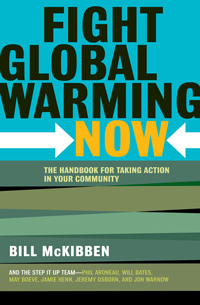
For more on the complexity of the economy & action, the brilliant author Bill McKibbon has a new title "Deep Economy," which explains issues of growth, sustainability, & oil economies far more expertly than I can. You might want to pick up his "Fight Global Warming Now" while your at it.

Tuesday, May 26, 2009

Strawberry season: keep it organic please


Nearly every day for the past few weeks, I've come across after-work fieldworkers selling they're quota of strawberries on street corners. I'm had to stop for one amid a lot of events which involved bringing food to share.
"Organic?" I asked.
"Si! Organica," he assured me. And I was off with my half-crate, glad to have had a choice of something healthier to offer my friends. I grew up in the strawberry capital of the world...at a time when organic food was not even much of a concept in people's mind. Pesticide use was rampant (and still is in most parts of the world). Lucky for us, the tide is turning. Some resources below if you're having a hard time deciding to get unconventional.
The Organic Report
Tips for Buying Organic on the Cheap
Organic Trade Association
Grow A Farmer (trains Organic Farmers)