Rewiring my brain to California after the months in India has been an adjustment from circular time to fast and linear.
In my efforts to both keep up with where I am now, and the momentum of my India pursuits, I filled my first week back in the States, with, among other things, a Songwriting Collective critique session, a 'chant & songwriting' class at Berkeley's Freight & Salvage and a North Indian Raga singing class at San Francisco's Zambaleta.
Doing some peer review with my fellow songwriters over a meal has become one of my favorite activities and felt like 'home'— I'm going to keep that going on for as long as possible —while the two other workshops were entirely new ground.
At the Freight, Michael Smolens, a local composer, poet & percussionist introduced me to a whole new approach to making songs. I was intrigued by the 'chant' aspect of Smolen's class title because of identifying as a songwriter with a Buddhist chanting practice (with the addition of the supplemental study of several Indian chants that comes with yoga practice). This 'wasn't no kirtan' as Smolens put it when I said as much. Instead, his class title referred to his use of chant's cadence and tempo. His approach was based on finding the rhythm of a line in one's body before even beginning to vocalize or pick up an instrument. By finding one's unique 'pulse' a song could be launched. It was kind of magical watching Smolens take our nascent words and beats, assess their rhythmic notation then take off from there on his keyboard while we sang our song fragments. I was delighted to find I seemed to have started a funk tune. We'll see where it goes....
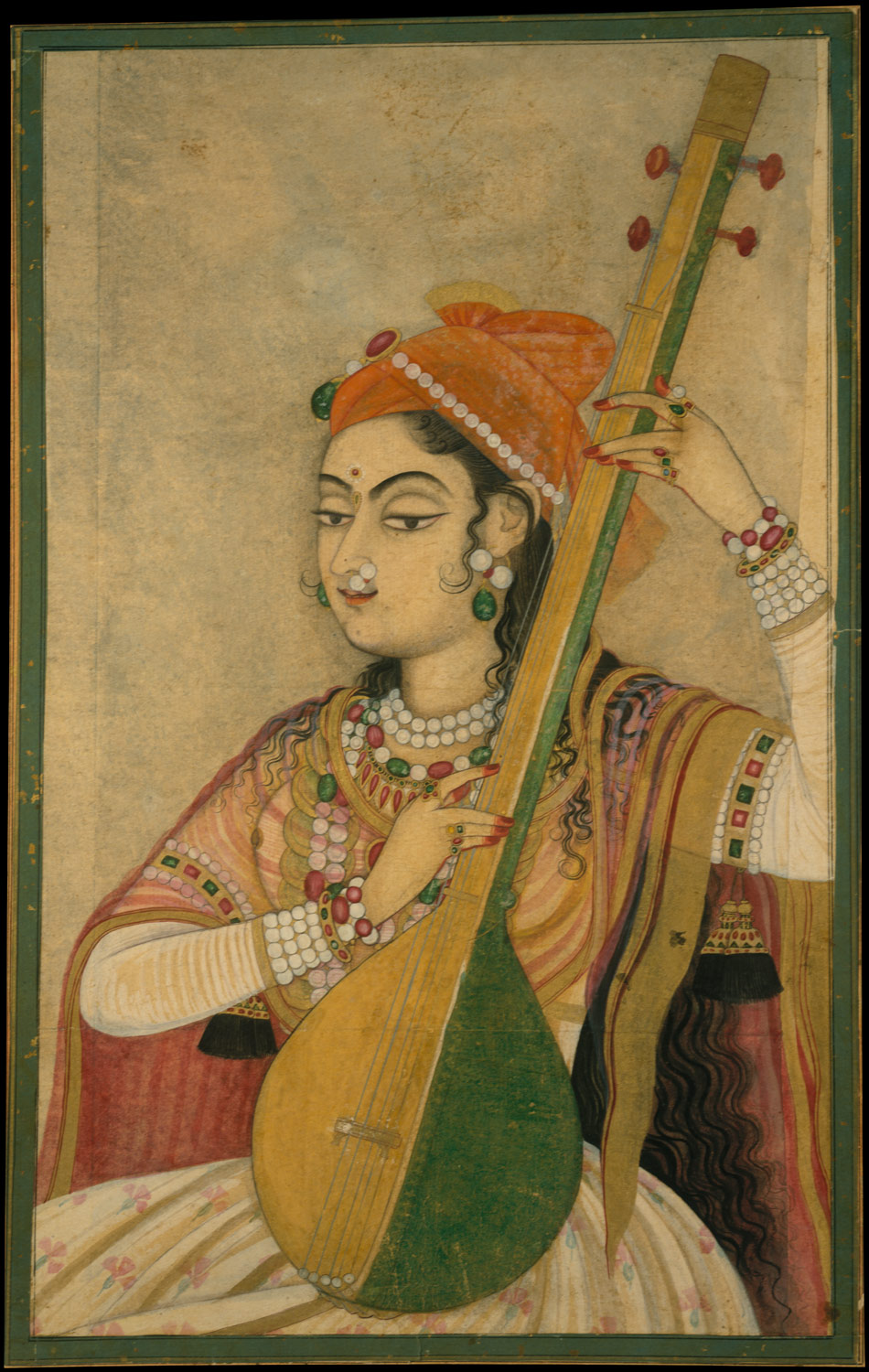
A few days later, I headed to the Mission District to Zambaleta, a world music center that offers a carefully curated selection of African, Brazilian, Indian, Easter European, & more dance and music classes. Given my near daily Carnatic voice classes in Mysore, to say I was missing the Indian scale was an understatement. So I was pretty excited to see Zambaleta had a Hindustani Raga Workshop. Teacher and musicologist Matt Rahaim quickly informed me that this was a North Indian discipline, thus somewhat different from what I'd been singing in Mysore. Then he proceeded to give me a quick review of how to approach playing a Tanpura (another practice to say the least). But the bulk of the class was spent learning to sing a swara based on shape rather than note, and applying this to song. Joy! I'm still not sure what I'm doing with my accruing familiarity with Sa Re Ga Ma, but let's just say I'm compelled to continue exploring. Unfortunately for me Rahaim teaches full time in Minnesota, not here. Nonetheless, Zambaleta —the name comes from the Egyptian term for spontaneous chaotic street party — has a pretty passionate director commited to diverse and quality programming. Ole!


