Showing posts with label film. Show all posts

Wednesday, April 17, 2013

Artist Interview: Sarah Fisher's Sacred Video Network

I first met Sarah Fisher when I was looking for a local director and filmmaker for a  music video for "Let's Move". Sarah has a clear aesthetic and an appreciation for both independent artists and Eastern Wisdom traditions — we had fun working with her to boot! I recently caught up with Sarah about her latest project, The Sacred Video Network, a project dear to her heart.

Q How did you first get into film making? Who or what inspired and inspires you?
SF: I've been making films since I was 12. I have loved creating visual stories since I was a kid. I studied Mass Communications/Broadcast Journalism as an undergrad because I wanted to be an international television reporter. While I never ended up pursuing the TV reporter path, I did develop a strong interest in producing/directing documentary films. Documentaries are such an important visual medium. I love that you can be both creative and educational — that you can really move people by crafting a story in a way that a broadcast entity most likely wouldn't do on their own

Q Whose work you look to as a standard? Do you have any mentors?
SF: I have a lot of mentors! I try to surround myself with people who are talented in all areas of film. I admire filmmakers like David Lynch, Walter Salles, the Maysles brothers, and Darren Aronofsky. Specifically, right now I am focused on entrepreneurship. So, I spend more time studying business-related topics than film making techniques. You'd be more likely to find me at a Meetup group, intensive start up business conference, or marketing seminar than any film networking group.

Q Tell us about the Sacred Video Network? 
SF: The Sacred Video Network is a start up website that will greatly raise the visibility and help forward-thinking holistic businesses reach their target customers. The Sacred Video Network (SVN) will widely promote our clients businesses across the web through unique distribution methods. These are some of the video products we produce to help your business gain exposure: testimonial videos, promotional videos, mini-documentaries, instructional videos. The mission of the SVN is to really connect holisitic businesses with their nice audience in a powerful, engaging way as well as help educate consumers who want to learn more about ANY type of holistic practice. We'll be launching our website in a few months. To learn more, visit http://www.sacredvideonetwork.com/ 
Q: Describe your dream project?
SF: I have so many dream projects! I've really been trying to reign in my focus lately and not take on too many big projects at once. The Sacred Video Network is my passion project right now and I'm determined to make it a sustainable business. I believe in the mission strongly because it can help so many people around the world improve their lives. After a few years of going strong with the SVN, I hope to build a music video network for independent musicians. Doing work in one medium for a very long time seems rather boring. Variety is the spice of life! I want to use the powerful medium of film/video to create a lasting impact of the lives of many people with lots of creativity.
Contribute to Sacred Video Network:

Monday, December 6, 2010

Artist Interview: Talking with Documentary Filmmaker Laura Bouza


Knowing of my interest in and practices of singing, yoga and chanting, writer Andrew Gori tipped me off to the work of filmmaker and yoga teacher Laura Bouza. Bouza, a graduate of the California Institute of the Arts in film with several documentaries under her belt, had completed much filming of "Gaia Mama: A Sound and Light Portrait" about sound healers, Florence Riggs and Kabbalah Bach. Bouza discussed her work amid completing production of 'Gaia Mama' and readying for a screening of her 2007 short "Naomi & Irving" at San Francisco's New Nothing Cinema

Q How long have you been working in documentary form? How do you choose subjects?

LB I’ve been working as a filmmaker/media artist for the past decade. Every film I make has its own life force, so to speak, and I choose its form accordingly. For the past four years I have been leaning more towards documenting people. The subjects I choose usually correspond with a desire to learn about someone or something. My work often takes a keen interest in the body, movement and the everyday practices performed by people.

Q Can you discuss more about your interest in 'haptic nature of perception?' Are you a dancer and/or have you done any other somatic work?

LB I am interested in the idea and practice of using the sense of touch to communicate information. Touch as an articulation that moves beyond words or images or sounds. Touch as primary sense, primary instinct. I grew up dancing. My grandmother was a dancer and always encouraged me to move in whatever ways were instinctual to me. This process, or encouragement rather, has moved into the way I approach filmmaking; I let the films move in ways that are instinctual. I also have a strong interest in somatic explorations. I practice and teach yoga. As I became more serious about filmmaking I had a desire to keep my artist identity separate from my yoga identity. More recently I’ve been attempting to bring these disparate selves into one. I see practicing yoga and making films as extensions of a spiritual practice.

Q Discuss your latest project, on sound healing. What attracted you to the work? Are you familiar with chanting practices and applications?

LB The work of sound healers attracted me for a few reasons. First, I am interested in alternative healing modalities and get a lot out of learning about different ways to approach health and healing in the body. Secondly, I am moved by the work of the two women who comprise Gaia Mama, Florence Riggs and Kabbalah Bach. Their practice and passion inspired the film. Moreover, I’m interested in tracing how their sound practice has evolved as individuals and together as healers.

In terms of chanting practices and applications, I am familiar with chanting in a yoga context but I’ve yet to explore chanting in other forms and practices. In many ways this film is about the exploration of the unknown. For myself it’s a way to investigate that which is foreign to myself and in a broader context it seeks to bring light to a healing practice that is both powerful and subtle. The film will most likely raise more questions than it answers, seeking to extend a sense of curiosity about the potentials and means of healing.

Q Who are your main influences, film or otherwise? Whose work do you love, look to for inspiration?

LB I am highly influenced by écriture feminine writers Hélène Cixous and Luce Irigaray, drawing inspiration and curiosity from the notion of writing the body, woman’s acute sense of touch, and how this translates to film. The films of Agnès Varda, Chantal Akerman and Catherine Breillat have been a great influence. Claire Denis’ film Beau travail, in particular, is a favorite. Other influences include American Avant-Garde filmmakers Yvonne Rainer, Chick Strand, and Su Friedrich, among many others. The performance work of Dean Moss, Anna Halprin and Margie Gillis have been highly influential as well as the photographs of Cindy Sherman and Robert Frank.

For more information about Gaia Mama or Laura's films go to http://www.laurabouza.com/ or or contact Laura directly at laurabouza@earthlink.net.

Photos, top: Laura Bouza (c) with Kabbala Bach & Florence Riggs in May, 2010; bottom photo: Kabbalah Bachof Gaia Mama.

Thursday, October 21, 2010

Artist Interview: Liz Bucy's Bicycle Ballet


I met Liz Bucy many years a go during a bike race in the Rocky Mountains. I was having what would be my best season while Liz was just returning to cycling and we somehow connected mid-pack. High on endorphins, we 'cooled down' by pedaling up Vail Pass chatting about it all and a friendship was born. Over the next several years, which saw Liz go pro and me concentrate more on my writing, I learned that in addition to being a great athlete, she was a true artist. A Francophile with a love of music and a background in ballet, Liz possesses a unique and clear aesthetic that combines old Europe with movement, beauty and decay. Now living in Santa Fe where she maintains a bodywork practice, I caught up with her as she prepared to make a movie based on a bicycle ballet of Giselle over Halloween weekend.

Q: Has anyone done a bicycle ballet before? How do you go about choreography and how does your early training in dance & years as a bike racer come into play?
LB: I've found some clips of people doing bicycle ballets [which] gave me lots of good ideas. This is going to be a bicycle ballet — each character will have a bicycle and everyone will do a very loosely defined form of ballet. Actually, what I hope will happen is that the inner ballerina in everyone will just manifest in all-out biker goofiness. Oh, but wait, Giselle is really melodramatically serious. But since it is in B/W, I think it will all be perfect.
Some ideas I have for choreography are slightly elevated views of the dancer/bikers doing a couple things in formation — zig-zagging around the cemetery, doing floral patterns, sunbursts patterns... The main idea I have is for Giselle to go down with a broken part (omg, i meant heart! Freudian bicycle stuff!!) , spiraling away from her bike but not letting go until they both meet the ground and are at rest in a beautiful curvy "S" shape. ... stunning!
As far as my bike racing years coming into play here, I think that my joy of riding came from the days where I felt like I was simply flying, and "dansant sur les pedales," which happens when you are out of the saddle a lot, climbing hills, using your entire body, upper and lower, and there is a real sense of grace. To give a dancer wheels is to create magic. It just seems natural to me that bikes and ballet should be together.

Q: What films are you looking to for inspiration? Would you count anyone or thing as an inspiration for the piece?
LB: Hmm... somebody told me that I should watch the modern day Romeo and Juliet to get the sense of anachrony. I have not yet seen it. It's great because things people post on Facebook sometimes help me —I have started noticing details in other films lately and storing them in the vault for the filming [coming up].
As far as counting anyone or thing as an inspiration for the piece... My friend Trice comes to mind. He is the person who got me into bike racing when I was 16. We trained together and did our first race together (in which we got dropped at the starting gun, rode a few miles and then turned around laughing cause we were kinda tired anyway!). Trice got killed on his bike when we were just going into our senior year in high school... I might have been predestined to the slightly morbid side of things anyway, but after that, October has always been challenging and slightly heart-breaking for me. Death, bicycles, beauty... grace and feeling the spirits of people you've known all around, still talking to you and with you. Wheels spinning... Giselle really is tragic because for one, all the bad shit happened because of a misunderstanding on her part... But also tragic because love just found has become love lost almost instantly. The finality of death is heart-wrenching, but then the magic that can continue between souls is deeply inspiring, even if we don't get the earthly creature comfort of that person anymore.

Q: What other artists/musicians have been feeding your muse of late?
LB: Tori Amos is always inspiring. Today, her rockin song Lady in Blue is with me... my housemate and I just synced up our iTunes last night and so I am totally totally psyched to have an entire new music library with lots of Cure on it!! I lost all my vinyl Cure, so I am really really content today. Music is so important. I have also recently been listening to a local group's CD — they are called Medjool and are Santa Feans. Great gypsy-type music. One of there songs, I have visions of people stomping and dancing, a sweet riot — maybe I can use that in Giselle for the happy times scene with the campy teenage villagers! we'll see.... I've also been really taken by Lhasa de Sela's music lately. A friend posted a really cool video of hers and I was completely mesmerized. I went to sleep that night feeling completely electrified, content and so excited that I’d had the good fortune to discover this woman and her music that touched me so deeply!! I woke up early the next day and Googled her immediately to find... that she had passed away eight months earlier on new year's eve after fighting breast cancer. She was only like 40 years old. This affected me dramatically. It's all in keeping with the Giselle thing — love found and lost pretty much immediately. I have been listening to her a lot since then and though I’m sad that she's not really on the planet anymore, I have learned a ton from her. If you don't know her, check her out!! C'est sublime...

Q: Why Giselle? & why shoot on Halloween/Day of the Dead?
LB: To film a B & W bicycle ballet of Giselle... I wish I could remember when this first came to me. In 2001, when my son was one year old, my then-husband and I had moved to Carlsbad, NM, to open a bakery and cafe. I think it was there that the idea came to me, in October. I had a Super 8 Camera and loved to shoot film. We got a lot of folks together and went up on the one hill in Carlsbad one beautiful fall evening in the Chihuahuan Desert and filmed Giselle. It was an other-worldly sight, all these ghostly figures running around with cactus and a setting sun... amazing images. But unfortunately, that was not to be. My sweet little toddler had pulled the Super 8 off the shelf one day and it took a tumble, but seemed all right. It sounded all right and all the lights were working... the film was engaged... but when the people in Hollywood sent it back and said there was nothing on there, I knew the camera was malfunctioning. Good thing some people took pictures of the filming!! That's all we got. So in two weeks, this will be 'Giselle: Take Two.'
Halloween, All Souls Day, and Day of the Dead is the time when the veil is temporarily lifted between our physical world and the world of those who've gone before. Connection with those who've gone before is easier and stronger, just as it still is during the weeks and months right after someone dies. And that is what Giselle is about — the prince goes to the cemetery the night she is buried and spends all night fighting the Willis and the Queen of the Dead so he can have a few more precious moments with Giselle before the sun comes up and she is gone to the other side. Well, actually, that is implied. We don't really know if the prince kept going back night after night, month after month, year after year... He could have had that connection with her....

Q: Where would you like the film to go post-production?
LB: I have never made a movie before, so I am starting with this, a short film, probably 5-10 minute silent film...[maybe]... a short film festival! Facebook, most definitely — I understand its technology, it's easy!... But really, my dream would be to take it to Marfa, TX, if they have a short film category. I drove through there last May and it was neato.

Giselle: The Bicycle Ballet films Oct. 31 in Santa Fe. For more information, contact Liz @
ebucy@yahoo.com

Tuesday, June 9, 2009

NY: Songwriters & The New India


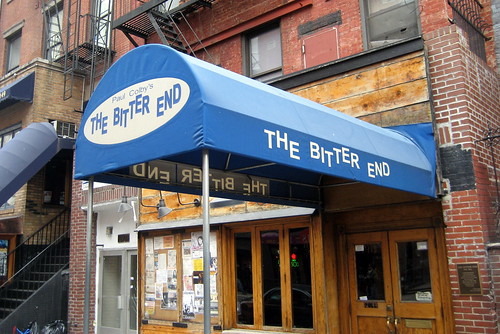
Thus far, my week in New York is being split pretty evening between the songwriting world & the yoga and India interests. Sunday night I was one of 14 (yup, 14) songwriters who participated in the New York Songwriter Sessions at The Bitter End. People from all over the world, country and New York & Brooklyn. Mostly guitars, mostly three chords & variations on the truth, one band, a couple of electrics, one truly tasteless act, one truly charming. I was happy to try out the storied room — features photos of Bob Dylan, Joan Baez, Linda Rondstandt, Andy Gibb (!--at 10, I had a poster of him on my wall) from back in the day when the Village was it for the new troubadors whose acts most of us are following in some way — and glad I'm now welcome back.

Yesterday, I met up with another friend from my latest trip to Mysore to check out a selection from The New India movie series at MoMa. Timing had it that we ended up at Nandita Das’s Firaaq. Das is quite a famous & acclaimed actress, filmmaker & activist in India and she was on hand to introduce by the film she wrote about the sectarian riots that resulted in numerous deaths, most of them Muslim, in Gujurat in 2002. It was quite an accomplishment, ...and we were both traumatized by the depictions of violence, traumatic stress suffering housewives, angry men. We had to leave, gasp in an atrium where a fusion band was setting up to play happy hour and people munched on goat cheese tapas. Which doesn't mean don't go see the film-I'm a notorious lightweight when it comes to violence it was definitely a wake up call as too much of this sort of atrocity is still going on in the world. Plus, the nine-minute short, award-winning Wagah by Suprito Sen, about a nightly flag ritual that takes place at the India-Pakistani border checkpoint was equal parts charming and eye-opening about walls, culture and simple humanity.

Monday, October 8, 2007

treats


key purchase for the shorter days ahead: A Beamer Planet 5 White LED Bike light from Mojo Bicycle Cafe, my bike shop of choice (conveniently located across from the Independent) for Bontrager care. Thanks Remy (a fellow UCSC alum) for taking a break from the cafe to set my bike up.

key treat: cacao nib dark chocolate bar from Miette Confiserie

Great NY Times Magazine cover story about the Todd Haynes movie “I’m Not There,” yesterday--figuring out when to see it. From Haynes' pitch to Dylan to make the film: "“If a film were to exist in which the breadth and flux of a creative life could be experienced, a film that could open up as oppose to consolidating what we think we already know walking in, it could never be within the tidy arc of a master narrative. The structure of such a film would have to be a fractured one, with numerous openings and a multitude of voices, with its prime strategy being one of refraction, not condensation."